 How my food lives
Fish · Physical interventions
What treatments do farmed fish get?
Routine treatments are not banned by the law. Level at the front: Wild-caught (no label) and MSC wild catch (Fisheries Standard v3.1). Weakest: 5 standards, among them Legal minimum for farmed fish (Animal Welfare Ordinance, TSchV) and Knospe trout and salmon (tanks, net pens).
Why it is like this
The law limits handling to the unavoidable. Knospe, ASC and Naturland ban routine treatments, and Naturland excludes animals after more than three treatments in a lifetime from the label.
What the labels say
| Standard | Level |
|---|---|
| Legal minimum for farmed fish (Animal Welfare Ordinance, TSchV) | 2 Only if the animals might otherwise injure themselves with them |
| Wild-caught (no label) | 4 Never. The animal keeps everything it was born with |
| MSC wild catch (Fisheries Standard v3.1) | 4 Never. The animal keeps everything it was born with |
| ASC farmed salmon (Farm Standard or Salmon Standard v1.4) | 3 Only if a particular animal needs treatment itself |
| Knospe trout and salmon (tanks, net pens) | 2 Only if the animals might otherwise injure themselves with them |
| Knospe carp (natural pond) | 2 Only if the animals might otherwise injure themselves with them |
| Naturland aquaculture trout and salmon (pond, net pens) | 2 Only if the animals might otherwise injure themselves with them |
| Naturland aquaculture carp (pond) | 2 Only if the animals might otherwise injure themselves with them |
How we read the levels
- Always, if it makes keeping the animals easier.
- Only if the animals might otherwise injure themselves with them.
- Only if a particular animal needs treatment itself.
- Never. The animal keeps everything it was born with.
Level 2: Only if the animals might otherwise injure themselves with them.
Applies to: Legal minimum for farmed fish (Animal Welfare Ordinance, TSchV), Knospe trout and salmon (tanks, net pens), Knospe carp (natural pond), Naturland aquaculture trout and salmon (pond, net pens) and Naturland aquaculture carp (pond)
By law, painful procedures are allowed only with pain relief, and that includes fish. Routine treatments are banned, treatment after diagnosis stays allowed. That is the case at Knospe, ASC and Naturland.
Knospe: no antibiotics for parent animals and juveniles, and treatment with unlisted agents only on prescription of the herd vet (5.7.8). ASC: no preventive antibiotics (4.4.5), no growth promoters (4.4.3), antiparasitics allowed up to limits (4.4.14). Naturland: routine and prophylaxis with chemical-synthetic agents not permitted (6.4), medicines only after diagnosis and prescription by a vet (6.3), and more than three treatments in a lifetime exclude the fish from the label (6.5). The Animal Welfare Act allows painful procedures only with pain relief (Art. 16), and the exception for marking does not apply to fish (Animal Welfare Ordinance Art. 15 para. 2 lit. a). So the legal minimum is at 2 as well.
Level 3: Only if a particular animal needs treatment itself.
Applies to: ASC farmed salmon (Farm Standard or Salmon Standard v1.4)
Interventions on live fish are banned: Norwegian law forbids carrying out interventions on live fish or removing parts of their body. That applies to ASC salmon from Norway.
Akvakulturdriftsforskriften § 31 bans interventions and the removal of body parts on live fish. Marking that does not restrict behaviour, cause harm or put undue strain on the fish stays allowed, as do interventions a vet or fish health biologist carries out for the health of the fish. ASC also bans preventive antibiotics and growth promoters (4.4.3, 4.4.5).
Level 4: Never. The animal keeps everything it was born with.
Applies to: Wild-caught (no label) and MSC wild catch (Fisheries Standard v3.1)
Nothing is changed on or done to the wild fish before it is caught. The step comes from biology, not from a rule.
Procedures and treatments exist only in farming. What happens at and after the catch is covered by the question on death. For wild fish without a label and with MSC the step comes from biology, not from a rule: the fish lives free until it is caught. MSC has no welfare rule and changes nothing here.
What stays open
There is no rule on this that we found. Wild catch and MSC involve no procedures. Handling during harvesting, sorting and holding is usual.
Videos
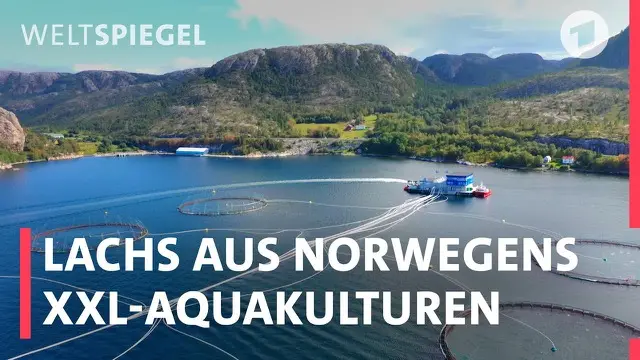 The tough business with salmonWeltspiegel (ARD), 29 min
Salmon farming in Norway: how the fish are kept and what problems arise.
Sources
- Wild catch: the fish lives free in the sea, a lake or a river until it is caught (biology, no rule)
- Animal Welfare Act SR 455, as of 1 Sep 2023 (seen 21 Nov 2026)
- Animal Welfare Ordinance SR 455.1, as of 1 Feb 2026 (seen 21 Nov 2026)
- Norway: aquaculture operations regulation FOR-2008-06-17-822, last amended FOR-2026-01-25-85 (§ 25 stocking density, § 31 interventions, § 34 stunning)
- Bio Suisse standards 2026, part II (Knospe)
- Naturland standards for organic aquaculture 05/2026
- ASC Farm Standard V1.0.1A2, August 2026
- MSC Fisheries Standard v3.1
- Everything on Fish
- How old are fish when they are killed for food?
- Do farmed fish ever see their parents?
- How much space do farmed fish have?
- What does a farmed fish's habitat look like?
- Do farmed fish live outdoors?
- How long are live fish transported?
- How are fish killed?
- Label: Legal minimum
- Label: Wild fish without a label
- Label: MSC (wild fish)
- Label: ASC (farmed fish)
- Label: Knospe (Bio Suisse)
- Label: Naturland aquaculture