 How my food lives
Dairy · Mother and young
Are calves separated from their mothers?
In nature a calf drinks from its mother for 9 to 10 months. Here it is often only hours. The same for every label: The calf is separated from its mother soon after birth.
Why it is like this
A cow gives milk only after she has calved. Cows form a strong bond after short contact, and a later separation stresses them (Thünen Institute). The calf is usually separated soon after birth and then gets milk replacer or milk from a bucket. Neither the Bord Bia Quality Mark nor EU organic keeps cow and calf together.
What the labels say
How we read the levels
- Only briefly. It may be separated right after birth.
- A few weeks.
- Several months.
- Until the two part of their own accord.
Level 1: Only briefly. It may be separated right after birth.
The calf is separated from its mother soon after birth. It then drinks milk replacer or milk from a bucket or feeder. Nothing in the law, the Bord Bia Quality Mark, Grass Fed Dairy or EU organic rules keeps cow and calf together.
Directive 2008/119 covers calves but has no rule on staying with the mother. The Bord Bia dairy scheme (SDAS 3.7 (c)) lets calves under 8 weeks be housed in individual pens if they have direct and visual contact with other calves. EU organic rules ask for 90 days of milk, "preferably maternal milk" (Regulation 2020/464), which does not guarantee contact with the cow. SDAS also bans killing healthy calves on the farm and slaughtering healthy calves within 8 weeks (3.8.1 (a) and (h), in force from 1 January 2024). That matters for the bull calves of dairy herds, but it does not change the separation.
Videos
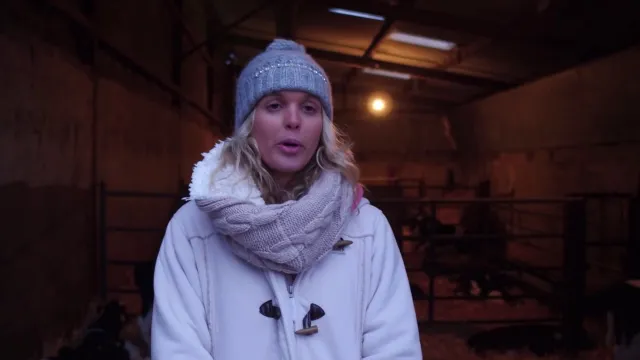 Calf Rearing: Animal Welfare and Health & SafetyTeagasc, 2 min
Teagasc on preparing calving and calf housing before the season.
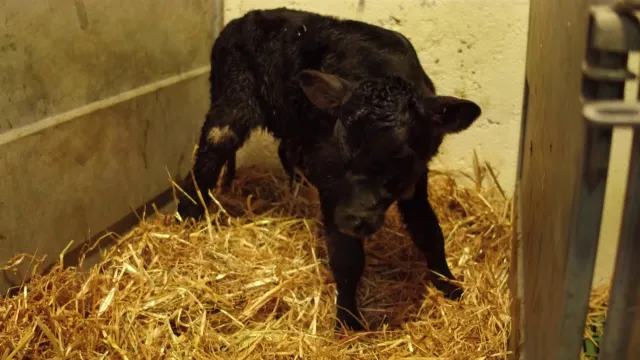 Calf Rearing, Calf HealthTeagasc, 3 min
Teagasc on scour and pneumonia prevention in calves.
Note: this video shows images some people find distressing.
Investigation into the farming of dairy cows in EuropeCompassion in World Farming, 5 minUndercover-style investigation of intensive dairy farms in Europe. From an advocacy group; not Irish farms.
Sources
- Everything on Dairy
- How long do dairy cows live?
- How much room do dairy cows have?
- What do dairy cows lie on?
- Do dairy cows get to graze on pasture?
- Are dairy cows' horns removed?
- How long are cows transported?
- How are dairy cows slaughtered?
- Label: Legal minimum (EU and Irish law)
- Label: Bord Bia Quality Assurance
- Label: EU organic (Irish certifying bodies)
- Legal minimum (EU and Irish law) vs Bord Bia Quality Assurance: Dairy
- Legal minimum (EU and Irish law) vs EU organic (Irish certifying bodies): Dairy
- Bord Bia Quality Assurance vs EU organic (Irish certifying bodies): Dairy