 How my food lives
Pork · Physical interventions
Are pigs' tails docked?
Usual: tails and teeth may be cut on a vet's proposal. Furthest along: Ecológico (EU organic). Weakest: 6 standards, among them Conventional (legal minimum) and B+ white pork (Interporc IAWS).
Why it is like this
RD 1135/2002 forbids routine tail docking and teeth clipping but allows them on a vet's proposal or after documented injuries, and castration without anaesthesia in the first week. The lowest Interporc tier needs a written vet recommendation. EU organic lists no pig tail exception and allows castration only with pain relief. We found no Spanish figure on how many pigs have a shortened tail.
What the labels say
| Standard | Level |
|---|---|
| Conventional (legal minimum) | 1 Always, if it makes keeping the animals easier |
| B+ white pork (Interporc IAWS) | 1 Always, if it makes keeping the animals easier |
| Ibérico de cebo (RD 4/2014) | 1 Always, if it makes keeping the animals easier |
| Ibérico de cebo de campo | 1 Always, if it makes keeping the animals easier |
| Ibérico de bellota | 1 Always, if it makes keeping the animals easier |
| Welfair | 1 Always, if it makes keeping the animals easier |
| Ecológico (EU organic) | 1-2 level 1 guaranteed (Always, if it makes keeping the animals easier); up to level 2 depending on the farm |
How we read the levels
- Always, if it makes keeping the animals easier.
- Only if the animals might otherwise injure themselves with them.
- Only if a particular animal needs treatment itself.
- Never. The animal keeps everything it was born with.
Level 1: Always, if it makes keeping the animals easier.
Applies to: Conventional (legal minimum), B+ white pork (Interporc IAWS), Ibérico de cebo (RD 4/2014), Ibérico de cebo de campo, Ibérico de bellota, Welfair and Ecológico (EU organic)
Under Spanish law, piglets under seven days old may be castrated without anaesthesia and without a medical reason, and tails and needle teeth may be cut on a vet's proposal or after documented injuries. That keeps the law on the lowest level, although routine cutting is banned. The Ibérico norm adds nothing. The lowest Interporc tier requires anaesthesia for castration but allows tail docking and teeth reduction without it on a vet's written recommendation, so it stays here too.
RD 1135/2002 Annex I 8: tail docking only if slaughterhouse records or documented injuries of the previous year show a need, after preventive measures, and never routine; needle teeth reduced before day 7; castration without tearing tissue. After day 7 castration and docking need prolonged anaesthesia and analgesia by a veterinarian. Routine castration without anaesthesia in the first week is level 1, and a cut allowed on a vet's advice counts as allowed. Interporc IAWS type 1 allows tail docking and teeth reduction with a written recommendation of the farm vet before day 7, without anaesthesia (5.6.2.2, 5.6.2.3, 5.6.2.7), so it is at level 1 too, although castration there needs anaesthesia (5.6.2.1). RD 4/2014 says nothing on cutting, so Ibérico stays where the law is.
Level 2: Only if the animals might otherwise injure themselves with them.
Possible on some farms, not guaranteed: Ecológico (EU organic)
Castration only with pain relief, and no tail docking among the allowed cuts: this is EU organic. Analgesia alone meets the text, so organic sits between level 1 and level 2.
Reg 2018/848 Annex II Part II 1.7.10: physical castration is allowed under the conditions of 1.7.9, which asks for 'adequate anaesthesia and/or analgesia'. With pain relief only, it sits between level 1 and level 2. 1.7.8 lists beak trimming, dehorning and disbudding as case-by-case exceptions and says nothing of pig tails.
What stays open
The Ibérico norm RD 4/2014 and the ASICI IBAW seal state nothing public on cutting or castration. At least the legal minimum applies. Welfair is in the table at the legal values: its public prerequisite checklist goes no further than the law on this question, and its score of the animals' state sets no value here.
Videos
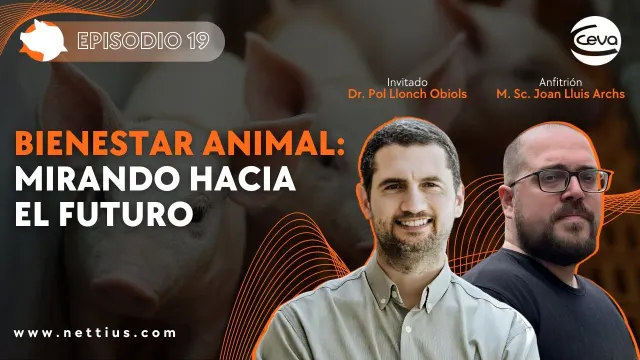 Animal welfare: looking to the future (pig sector podcast)Campus Porcino, 34 min
Pig sector podcast with a welfare specialist: precision farming, cage-free sows, tail docking and castration. A long conversation.
Further reading
- BOE: Real Decreto 1135/2002, pigs (in Spanish) (Legal text)
- Certicalidad: Interporc IAWS technical regulation (PDF, in Spanish) (PDF, rule text)
- EUR-Lex: Regulation (EU) 2018/848, organic production (Legal text)
Sources
- Real Decreto 1135/2002, pigs (BOE)
- Interporc IAWS technical regulation Rev. 06, 30.03.2020, white-coat pig (certicalidad.com)
- Real Decreto 4/2014, Ibérico quality norm (BOE)
- Biology of the animals (Vier Pfoten, ProVieh, FishBase, FAO)
- Regulation (EU) 2018/848, organic production, Annex II (EUR-Lex)
- Welfair prerequisite checklists (Anexo G): pigs M01/M02 of 01/08/2025 and laying hens M07 of 01/08/2025 (animalwelfair.com, PDF); minimum score 55 of 100 (Reglamento General v4.0 training slides)
- Welfair certification page (animalwelfair.com)
- Everything on Pork
- How long do fattening pigs live?
- How long do piglets stay with the sow?
- How much space does a fattening pig have?
- What do pigs lie on in the barn?
- Do pigs go outside?
- How long are pigs transported?
- How are pigs slaughtered?
- Label: Legal minimum
- Label: B+ Compromiso Bienestar Animal
- Label: Ibérico quality standard (RD 4/2014)
- Label: Welfair
- Label: Organic (EU)
- Legal minimum vs Organic (EU): Pork
- Legal minimum vs Welfair: Pork
- Organic (EU) vs Welfair: Pork