 How my food lives
Fish · Physical interventions
What treatments do farmed fish get?
Usual: no rule on treatments in the Spanish farm decree. Level at the front: Wild catch with no label and MSC. Weakest: Farmed fish (legal minimum) and ASC (aquaculture).
Why it is like this
EU organic allows medicines only where needed under a vet, at most two courses and two parasite treatments a year. ASC bans antibiotics critical to human medicine, but we found no other rule on treatments in its public text.
What the labels say
| Standard | Level |
|---|---|
| Wild catch with no label | 4 Never. The animal keeps everything it was born with |
| MSC | 4 Never. The animal keeps everything it was born with |
| Farmed fish (legal minimum) | 1 Always, if it makes keeping the animals easier |
| ASC (aquaculture) | 1 Always, if it makes keeping the animals easier |
| Acuicultura ecológica (EU organic) | 2-3 level 2 guaranteed (Only if the animals might otherwise injure themselves with them); up to level 3 depending on the farm |
How we read the levels
- Always, if it makes keeping the animals easier.
- Only if the animals might otherwise injure themselves with them.
- Only if a particular animal needs treatment itself.
- Never. The animal keeps everything it was born with.
Level 1: Always, if it makes keeping the animals easier.
Applies to: Farmed fish (legal minimum) and ASC (aquaculture)
Routine treatments against disease and parasites are allowed. Spanish law has no rule on handling or treatments of farmed fish in its farm decree.
RD 348/2000 Art. 3 b) leaves fish out of its Annex I specifications; veterinary medicine law is not covered here. Silence is level 1. For conventional salmon in Norway, the Norwegian Veterinary Institute reports that about one in four dies early. ASC salmon stays at level 1: its salmon standard (v1.5) sets no rule for this question. This salmon is not farmed in Spain: of the priced packs, Findus names Denmark and Arte Morhua names Norway. Danish law counts, the lower of the two, and it sets nothing here either.
Level 2: Only if the animals might otherwise injure themselves with them.
Applies to: Acuicultura ecológica (EU organic)
Routine treatments are limited: EU organic aquaculture prevents disease by husbandry and allows medicines only where needed under a vet, at most two courses a year and two parasite treatments.
Reg 2018/848 Annex II Part III 3.1.4.1: prevention based on conditions and husbandry, an animal health plan, a vet visit once a year; 3.1.4.2 (a): allopathic medicines only where necessary under a vet; (d): at most two courses per year, one in cycles under a year; (e): parasite treatments at most twice a year, once where the cycle is under 18 months. 3.1.6.2: handling kept to a minimum.
Level 3: Only if a particular animal needs treatment itself.
Possible on some farms, not guaranteed: Acuicultura ecológica (EU organic)
Only on a vet's instruction: EU organic comes close, since allopathic drugs need a vet, but it is not written as the only way.
Reg 2018/848 3.1.4.2 (a) allows medicines only 'under the responsibility of a veterinarian' where plant or homeopathic products are inappropriate; (c) gives an order of preference. So it sits between level 2 and level 3.
Level 4: Never. The animal keeps everything it was born with.
Applies to: Wild catch with no label and MSC
Nothing is done to the animal until it is caught. Injuries from nets and bycatch are not counted here.
This is our own reading of biology; no rule says it.
What stays open
ASC prohibits antibiotics critical to human medicine and requires disclosure of treatments (indicators 1.4.5, 1.4.6), but we found no rule on body interventions in its public text. At least the legal minimum applies.
Videos
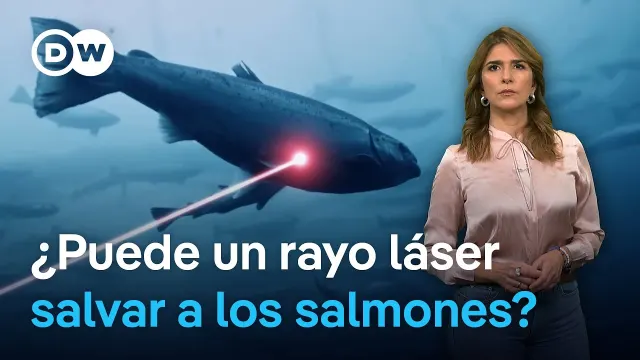 The salmon industry looks to technology to cut high mortalityDW Español, 13 min
Chile, second-largest salmon producer: high mortality, antibiotic use and the technical fixes the industry seeks.
 Fish welfare guide in Spanish aquaculture, vol. 5: turbotAcuicultura de España, 2 min
APROMAR, the aquaculture trade body, presents a turbot welfare guide made with scientists and animal welfare organisations.
Further reading
- EUR-Lex: Regulation (EU) 2018/848, organic production (Legal text)
- ASC Farm Standard (programme centre) (Label standard)
Sources
- Real Decreto 348/2000, farm animals in general (BOE)
- Biology of the animals (Vier Pfoten, ProVieh, FishBase, FAO)
- ASC Salmon and Cod Standard v1.5, October 2025 (asc-aqua.org, PDF)
- Danish Animal Welfare Act, consolidated act 994 of 2025
- Regulation (EU) 2018/848, organic production, Annex II (EUR-Lex)
- Own reading of biology (no rule document)
- ASC Farm Standard v1.0.1A2, mandatory for every audit from 1 May 2028 (programme-centre.asc-aqua.org)
- Everything on Fish
- How old are fish when they are killed for food?
- Do farmed fish ever see their parents?
- How much space do farmed fish have?
- What does a farmed fish's habitat look like?
- Do farmed fish live outdoors?
- How long are live fish transported?
- How are fish killed?
- Label: Wild catch
- Label: Legal minimum
- Label: ASC (Aquaculture Stewardship Council)
- Label: Organic (EU)
- Legal minimum vs Organic (EU): Fish